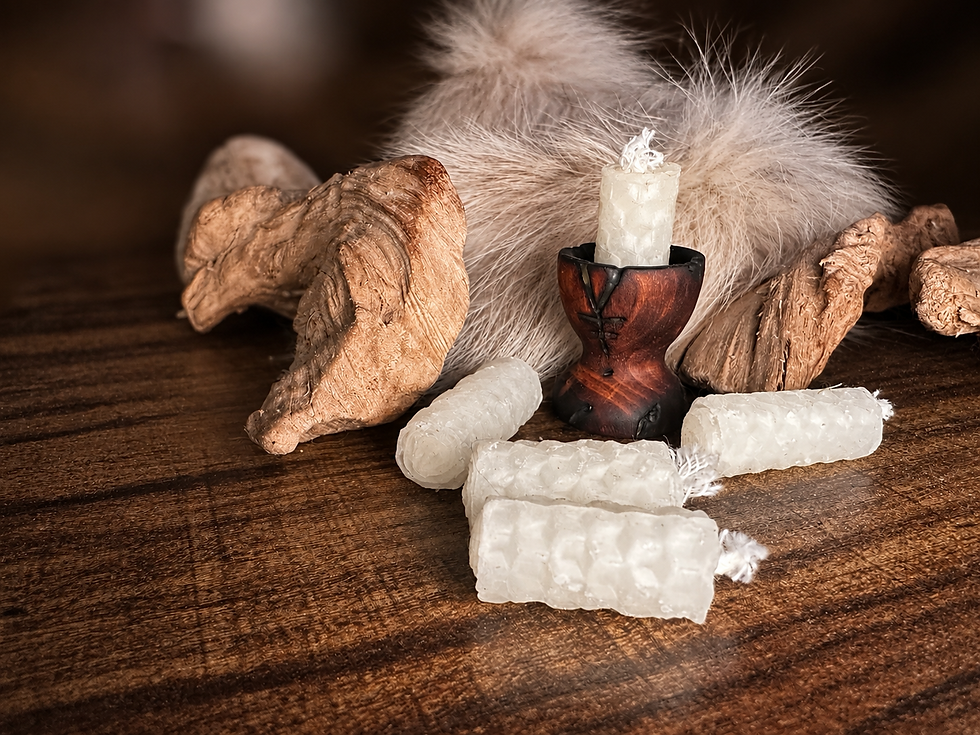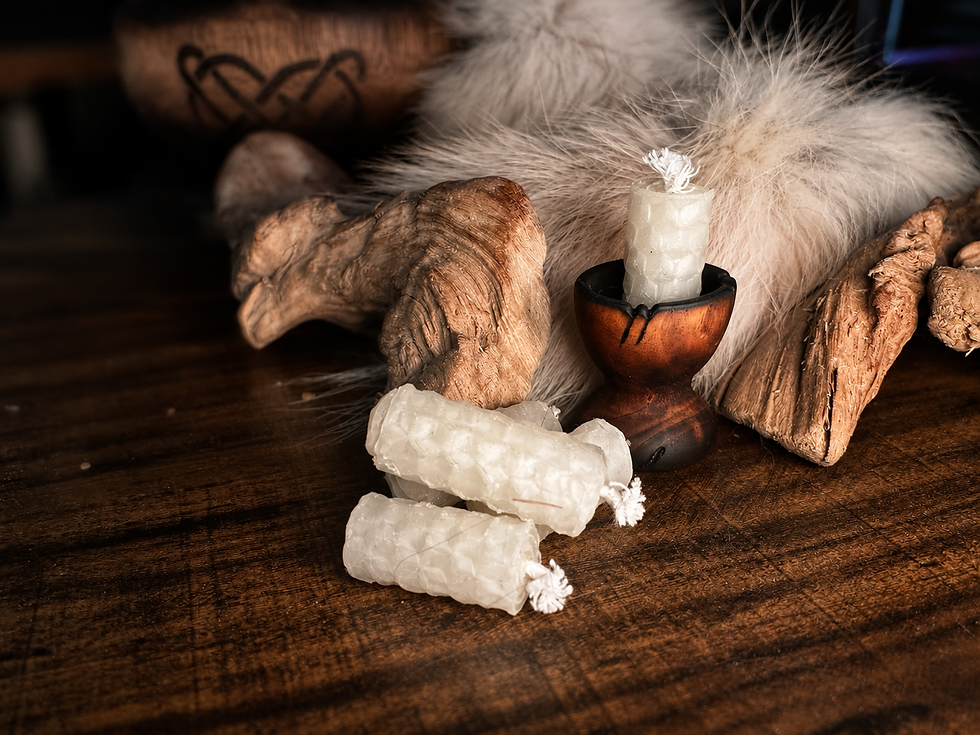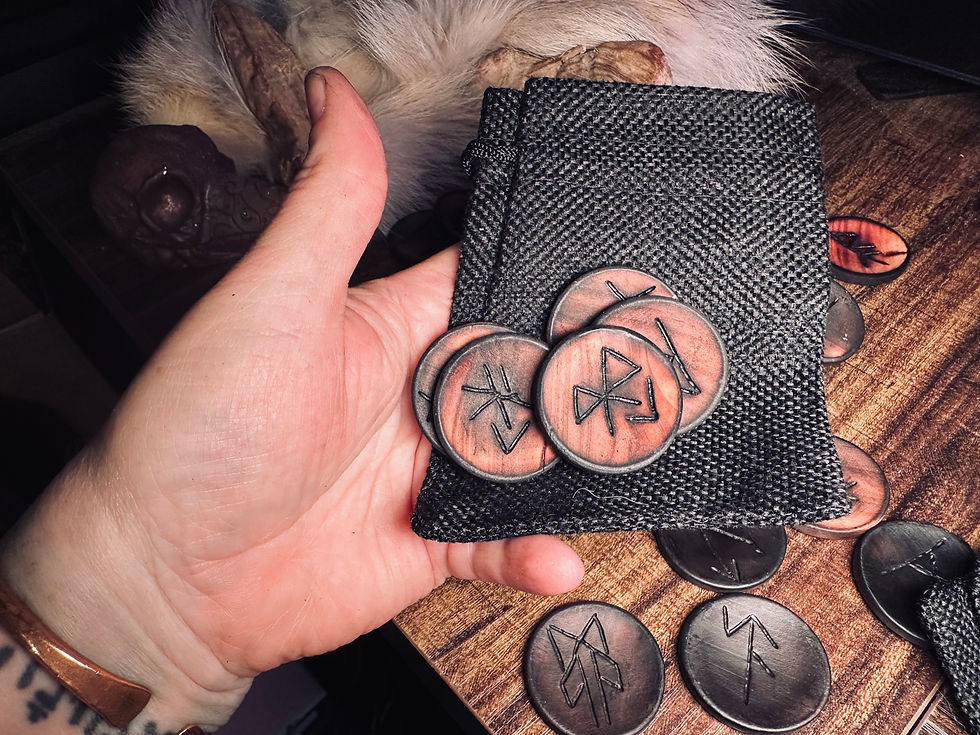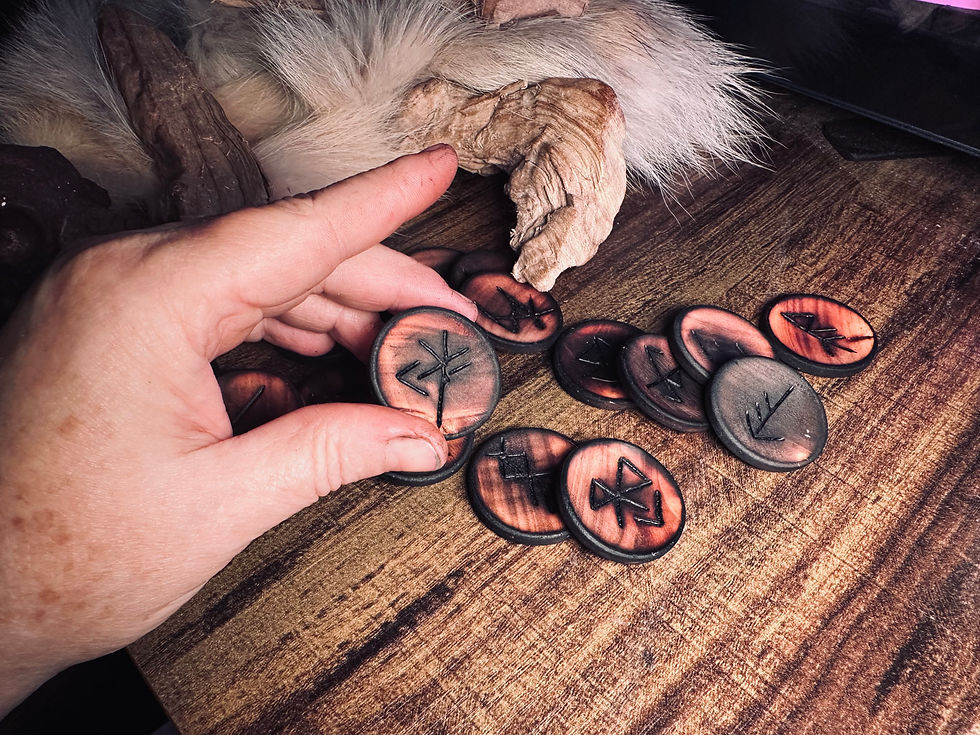
Ritual objects have always interested me because they sit somewhere between an ordinary tool and the work we ask that tool to do. A bowl is still a bowl. A ring is still wood. A vessel is still a vessel. What changes is the relationship we build with it, the purpose we give it, and the way repeated use begins to make it part of the practice itself.
The pieces here are made to be used. Working bowls may hold herbs, offerings, water, ash, stones, written petitions, or whatever a particular working requires. A vé ring can mark and contain sacred space, whether it is resting on an altar or carried outside for ritual. Vessels can hold materials during a working and remain on the altar afterward. Other pieces develop because I find myself needing a tool that does not quite exist yet, so I make one and allow the practice to tell me what it needs to become.
Some of these objects are informed by older Norse and Germanic ideas. Others are modern tools built from the same underlying understanding that sacred work benefits from preparation, boundaries, attention, and objects given a specific purpose. I am careful about that distinction. I am not interested in calling something “ancient” because it looks old or putting a rune on an object and pretending we have recovered a Viking ritual tool. Where there is history behind a piece, I will tell you. Where I have adapted an idea for modern practice, I will tell you that too.
How you use these pieces does not have to look exactly like the way I use them. I can explain why I made something, what I intended it to do, and how it functions in my own practice, but ritual tools become personal through use. They acquire associations, memories, and meaning because they have been present while the work was being done. That relationship is ultimately yours.